AI Phone Call Agents Compared: Latency, Turn Detection, and Interruptions
Why every published benchmark disagrees, what turn detection really costs you, and how to measure it yourself Here are two facts about AI phone agents in 2026, both well sourced, both true, and apparently incompatible. Fact one: Vapi targets p50 under… Read more »
Why every published benchmark disagrees, what turn detection really costs you, and how to measure it yourself
Here are two facts about AI phone agents in 2026, both well sourced, both true, and apparently incompatible.
Fact one: Vapi targets p50 under 500 ms. Retell publishes roughly 600 ms. Bland's homepage says 400 ms. Twilio's internal ConversationRelay testing reports 491 ms median.
Fact two: an independent benchmark that dialled these platforms over real phone lines and measured from the recorded audio found medians between 1,296 ms and 1,740 ms — every single platform two to four times slower than its own published figure.
Nobody is lying. They are measuring different things, over different transports, with different assumptions about where the clock starts. And until you understand exactly which thing each number describes, you cannot use any of them to choose a platform.
This article takes the measurement problem seriously, lays the published benchmarks side by side with their methodologies attached, explains why turn detection — not the language model — is now the dominant variable, and ends with a protocol for producing numbers you can actually trust.
Where the Time Goes
A voice turn on a phone call is a relay race with five legs, and the baton gets dropped between every pair of runners.

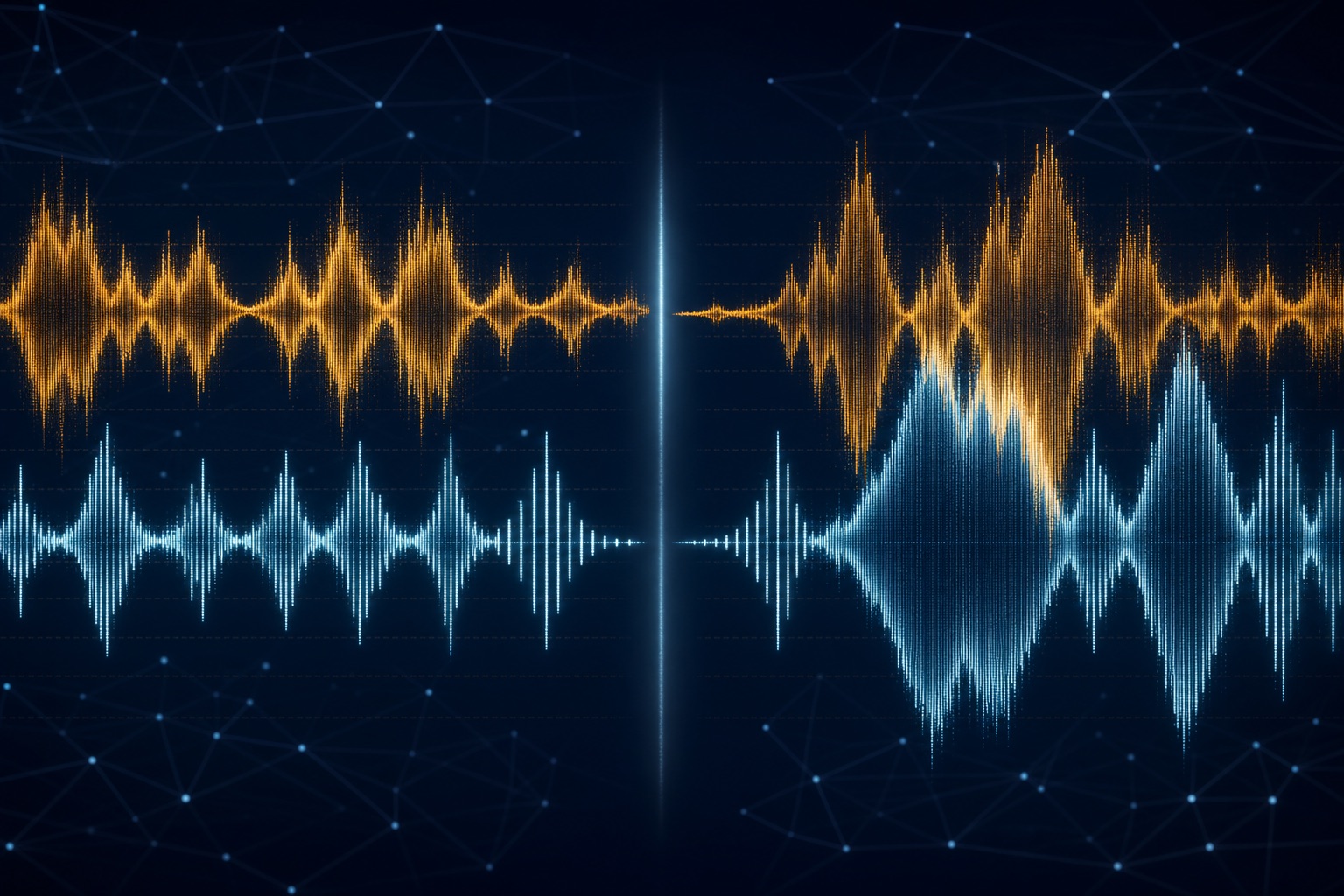
A voice turn is a relay race in five legs. One of them is always much wider than the others. Image generated with GPT Image 2.
| Stage | Co-located stack | Typical stitched stack |
|---|---|---|
| Network / SIP | 45 ms | 150 ms |
| Speech-to-text | 100 ms | 225 ms |
| LLM inference | 225 ms | 650 ms |
| Text-to-speech | 80 ms | 185 ms |
| Total | 450 ms | 1,210 ms |
Two observations. The LLM dominates both columns — which is why routing ordinary conversational turns to a small fast model and escalating only when reasoning is genuinely required is the highest-leverage change available to most teams. And the 760 ms gap between the columns is not a difference in model quality. It is geography, hop count, and how many separate vendors' networks the audio crosses.
What this table leaves out is the stage that usually costs the most: deciding that the caller has finished speaking. That happens before the relay starts, and a badly configured endpointing threshold can add more delay than the entire pipeline below it.
The Benchmarks, With Their Methodologies Attached
Four independent-ish studies have published numbers for these platforms in 2026. They disagree, sometimes reversing the rankings entirely. Here they are with the methodology that produced them, because the methodology is the result.
Study 1: Real phone calls, measured from recorded audio
The most methodologically transparent public benchmark dialled each platform's agent over a real phone call with a caller robot reading a fixed script, recorded both sides of the call on a single clock, and located speech boundaries in the recording using Silero VAD with an energy refinement. No platform-reported timestamps were used. 2,078 usable turns across five platforms; endpointing standardised at 0.1 s where configurable. The metric is time to first audio byte.
| Platform | p50 | p95 | Tail ratio | Usable turns |
|---|---|---|---|---|
| Telnyx | 1,296 ms | 1,856 ms | 1.43× | 419/432 |
| ElevenLabs | 1,424 ms | 1,768 ms | 1.24× | 429/432 |
| Bland AI | 1,520 ms | 2,248 ms | 1.48× | 429/432 |
| Vapi | 1,558 ms | 2,008 ms | 1.29× | 382/432 |
| Retell AI | 1,740 ms | 2,259 ms | 1.30× | 419/430 |
Note the last column. Vapi discarded 50 turns — more than ten percent — versus a handful for the others. A platform that occasionally fails to produce a usable turn at all is telling you something that no latency percentile captures.
Study 2: Production calls, voice-to-voice
A March 2026 study ran 500 production calls per platform, measuring voice-to-voice.
| Platform | Median | p95 |
|---|---|---|
| Retell | 680 ms | 920 ms |
| Vapi | 720 ms | 1,050 ms |
| Bland | 850 ms | 1,180 ms |
Retell finishes last in Study 1 and first in Study 2. Same platform, same year, opposite conclusion. This is the most important thing in this article: at the current state of the art, the measurement method moves the result more than the platform does.
Study 3: Fixed third-party stack
A different approach — hold the models constant (GPT-4.1, Deepgram Nova-3, ElevenLabs Flash) and measure the full turn, isolating the orchestration layer:
| Platform | Full turn, p50 |
|---|---|
| ElevenLabs | 1.73 s |
| Retell | 1.96 s |
| Vapi | 2.34 s |
Every number here is far above what any vendor advertises, because a full turn on a fixed third-party stack includes the parts vendors exclude when they quote their own optimised path.
Study 4: The carrier leg alone
Finally, a June 2026 test of 120 outbound calls per carrier isolated round-trip time on the telephony leg:
| Carrier | p50 RTT | p95 RTT |
|---|---|---|
| Telnyx | 71 ms | 118 ms |
| Twilio | 89 ms | 161 ms |
| Vonage | 94 ms | 152 ms |
Useful context: the carrier contributes under 100 ms. If your agent feels slow, the phone network is almost never the reason.
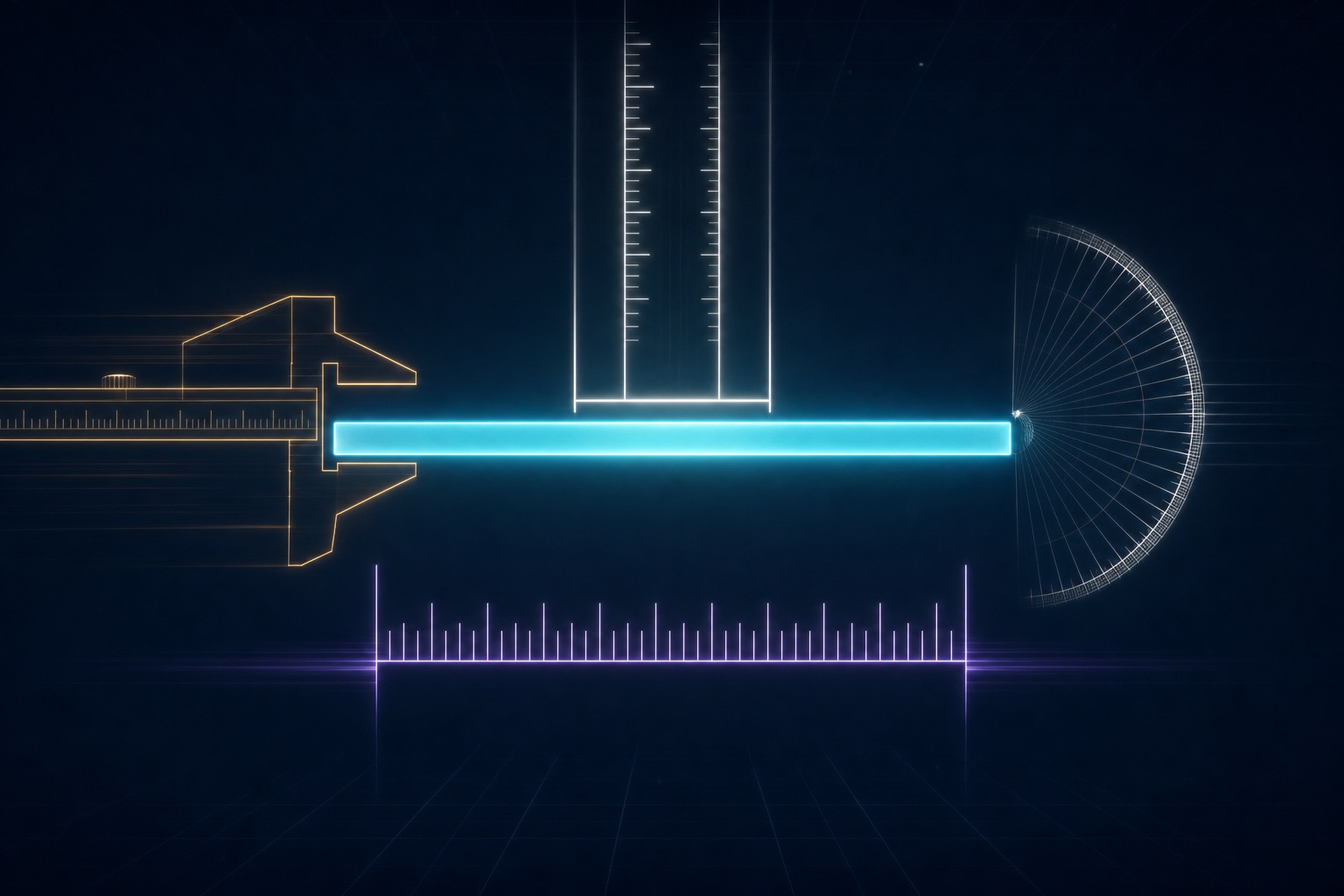
One object, four instruments, four readings. Every latency figure in this article is accurate; they are simply not measuring the same span. Image generated with GPT Image 2.
How to read all four together
| Number type | What it includes | What it hides | Trust it for |
|---|---|---|---|
| Vendor p50 claim | Optimised path, often WebSocket not telephony | Endpointing wait, carrier leg, tail | Rough architecture quality |
| Component latency (e.g. 75 ms TTS) | One model's synthesis time | Everything else | Choosing that component |
| Recorded-audio TTFAB | Everything the caller hears | Nothing — but includes recording overhead | Ranking real experience |
| Fixed-stack full turn | Orchestration overhead, isolated | Each platform's own tuned models | Comparing orchestration layers |
| Carrier RTT | Telephony transport only | The agent entirely | Choosing a carrier |
And the thresholds that matter perceptually: human conversational handoff sits near 200 ms; past roughly 800 ms a caller registers the delay; past roughly 1,500 ms it reads as broken. Note that most p95 figures in Study 1 sit on the wrong side of that second threshold. The median is what your demo feels like. The p95 is what your callers feel like.
Turn Detection Is the Real Differentiator
Every platform above can call GPT-class models and stream ElevenLabs-class voices. Those are commodities. What separates a natural agent from an exhausting one is the part that decides when to speak, and this is where the genuine engineering differences now live.
The endpointing tax
The naïve approach waits for silence. Set the threshold at 800 ms and you have added nearly a full second to every response before any processing begins. Over a ten-minute call that is real dead air, paid for by a configuration value. Lower the threshold and the agent starts interrupting anyone who pauses to think — which is everyone, mid-way through an account number.
The stack that fixes it
| Layer | What it does | Representative implementations |
|---|---|---|
| VAD | Classifies each audio frame as speech or not | Silero VAD — near-universal default |
| Endpointing | Watches the transcript stream for completion signals | STT provider endpointing config |
| Semantic turn detection | Predicts turn completion from meaning, can commit before silence | LiveKit turn detector (Qwen2.5-0.5B fine-tune, CPU inference, 14 languages); Pipecat Smart Turn |
| Conversational STT | Recognition and turn-taking in one model | Deepgram Flux; Tavus Sparrow-1 |
Deepgram's Flux, generally available in multilingual form since 29 April 2026 across ten languages with in-conversation language switching, reports median end-of-turn detection at 260 ms with p95 at 1.5 s, exposes a configurable eot_threshold to trade latency against accuracy, and reports cutting agent response latency by 200–600 ms versus conventional STT-plus-VAD. Tavus reports its Sparrow-1 flow model at 55 ms median floor-prediction latency.
Put concretely: switching from an 800 ms silence timeout to a semantic turn detector can save more latency than every other optimisation on this page combined. If you are shopping on latency, ask what turn detection the platform uses and whether you can change it — that answer predicts your experience better than any published p50.
Interruption Handling: A Policy, Not a Toggle
Barge-in is usually exposed as one boolean. That is the wrong shape for the problem, and it is the most common reason an agent that scores well on latency still feels wrong to talk to.
The reason is that incoming caller audio is not one thing. A useful taxonomy splits it six ways, each requiring different behaviour:
| Input class | Example | Correct behaviour | Failure signal |
|---|---|---|---|
| True correction | "No, Friday" | Stop, accept the turn, preserve task context | Caller repeats the same correction |
| Backchannel | "yeah", "mm-hm" | Keep talking; do not treat as intent | Agent cancels its answer and resets |
| Background noise | Keyboard, traffic, second voice | Continue; log a false interruption | Playback stops with no caller transcript |
| DTMF | Caller presses 2 during a menu | Route by digit, not by transcript | Digit ignored or handled as speech |
| Long entity pause | Pause mid-account-number | Wait; do not respond early | Agent interrupts before the entity completes |
| Escalation | "I want a person" | Stop and transfer immediately | Agent argues |
The failure that kills trust fastest is the false stop: the caller says "okay" while the agent is mid-sentence, the agent halts, and then treats "okay" as a new question. On one call it is a glitch. Across thousands of calls it is a measurable drop in completion rate, and it does not show up in any latency metric.
The right structure is per-message-type policy. Greetings interruptible after a grace period; menus accepting DTMF and speech; entity capture patient; legal, consent and payment disclosures non-interruptible; tool-wait fillers instantly cancellable; human-transfer intent always honoured.
And instrument it. The four events worth logging on every turn are the interruption candidate, the decision and the policy version that produced it, the recovery position, and confirmed false positives. Track false interruption rate and missed interruption rate as separate dashboards — they move in opposite directions and averaging them hides both. There is an open scenario pack for barge-in testing on GitHub that works across Vapi, Retell, Bland, Pipecat and self-hosted LiveKit.
The Platforms
Vapi
Vapi is the most flexible orchestration layer: bring your own STT, LLM, TTS and telephony, swap any of them, and tune the pipeline. Priced at roughly $0.05/min for orchestration, with every underlying provider billed separately. Independent testing puts a tuned stack at 500–700 ms median and the default pipeline meaningfully slower. Choose it when you want to control every component and are prepared to own the tuning; the flexibility is real and so is the configuration burden.
Retell AI
Retell is a managed stack with an emphasis on structured dialogue flows and enterprise compliance. Roughly $0.055/min for voice infrastructure, with pay-as-you-go from about $0.07/min. Reported around 600 ms out of the box in one study and last place in another — see the section above. Choose it when you want a supported managed pipeline with strong flow control rather than a component kit.
Bland AI
Bland uses bundled pricing — speech-to-text, LLM, text-to-speech and telephony in one $0.09–0.14/min rate — and purpose-built for high-volume outbound. Measured around 700–900 ms depending on Pathway complexity. The bundle is genuinely simpler to reason about commercially; the tradeoff is less control over each layer.
ElevenLabs Agents
Built outward from the best-regarded voice synthesis in the category, whose Flash model synthesises in roughly 75 ms. Agents bill from about $0.08/min on annual business plans and around $0.10/min on Creator and Pro, with LLM tokens passed through separately, and bundled minute allowances on each tier. SIP trunking connects existing telephony — Twilio, Telnyx, self-hosted PBX — with digest or ACL authentication, and a transfer-to-number tool supporting conference, blind and SIP REFER styles. Notably, it posted the tightest tail ratio in the recorded-audio benchmark, which matters more than a good median.
Telnyx
The distinguishing property is vertical integration: Telnyx owns the carrier network the audio travels over, and its architecture budget of 450 ms comes from co-locating the stack rather than from faster models. It posted the lowest median in the recorded-audio study and the lowest carrier RTT in the transport study. Choose it when the telephony leg is a first-class concern.
OpenAI Realtime
Not a platform but a model, and increasingly the thing platforms are built on. The Realtime API supports three transports — WebRTC for browsers, WebSocket for servers, and SIP to route a real phone call directly into a session. It is native speech-to-speech: audio in, audio out, no intermediate text bottleneck, and prosody preserved through the whole turn. Pricing is token-based rather than per-minute, which produces a wide effective range depending on how disciplined you are with context and caching. Choose it when you want the lowest achievable turn latency and can build the surrounding orchestration; avoid it when you need to log, audit or constrain the intermediate reasoning, because there isn't any text to inspect.
Synthflow, Twilio ConversationRelay, and the rest
Synthflow sits around $0.09/min for its voice engine with a no-code builder aimed at operators rather than engineers. Twilio's ConversationRelay attaches an AI agent to Twilio's existing telephony estate, with internally reported 491 ms p50 and 713 ms p95 — attractive if your call infrastructure already lives there.
Building it yourself: Pipecat and LiveKit Agents
Both are open source and both are genuinely production-viable.
Pipecat, originated by Daily, models a voice agent as a pipeline of processors through which audio and text flow, with a very large plugin library and near-daily development. Pipecat Cloud reached general availability in 2026 after a beta with more than a thousand teams, so the managed path exists if you want it.
LiveKit Agents is built on LiveKit's WebRTC media server, and its distinguishing feature is the room model: the agent joins as a participant alongside users, which makes multi-participant scenarios native rather than bolted on. One team publicly reported rebuilding a phone agent from Pipecat onto LiveKit Agents when a client scaled from 20 to 400 concurrent calls.
Self-hosting either can land well under $0.05/min at volume. You are trading platform fees for infrastructure, on-call and latency-tuning work — which is a good trade at scale and a bad one before you have found product-market fit.
What It Actually Costs
The single most common budgeting error in this category is comparing a platform-only rate against a bundled rate.
| Platform | Headline rate | What that covers | Realistic all-in |
|---|---|---|---|
| Vapi | $0.05/min | Orchestration only | ~$0.25–0.33/min once STT, LLM, TTS and telephony are added |
| Retell | $0.055/min | Voice infrastructure | From ~$0.07/min pay-as-you-go |
| Bland | $0.09–0.14/min | Everything, bundled | Roughly the headline rate |
| Synthflow | $0.09/min | Voice engine | Plus LLM and telephony |
| ElevenLabs Agents | $0.08–0.10/min | Platform + voice | Plus LLM tokens passed through |
| OpenAI Realtime | Token-based | The model only | Highly variable; caching and context discipline dominate |
| Self-hosted (Pipecat / LiveKit) | Infrastructure | Nothing bundled | Can go under $0.05/min at volume, plus engineering time |
Component reference points for building your own estimate: telephony around $0.014/min, streaming speech-to-text around $0.008/min, premium TTS around $0.05/min, and a small fast LLM around $0.01/min. Across the market, fully-loaded rates in 2026 span roughly a six-fold range, from about $0.05/min on the most aggressive self-serve plans to about $0.31/min on premium enterprise tiers.
One structural note: prompt caching is not a rounding error on a voice agent. Your system prompt — persona, guardrails, business rules, knowledge — is identical on every single call. Cached input on realtime models is priced at a small fraction of standard input. Turning caching on frequently changes model cost by an order of magnitude, and it is the first thing to check before anyone proposes downgrading to a worse model to save money.
Compliance Is Not Optional Here
Phone agents carry regulatory exposure that browser agents do not.
In the United States, the FCC's February 2024 declaratory ruling confirmed that AI-generated voices are an "artificial or prerecorded voice" under the TCPA. That pulls in consent requirements for calls to wireless and residential lines, identification and disclosure obligations, and opt-out handling — with statutory damages from $500 per violation, rising to $1,500 for willful violations. A further FCC rulemaking on AI-generated calls is expected to conclude around late 2026 or early 2027, and the widely anticipated outcome is an explicit AI-identification requirement at the start of the call plus consent language that names AI specifically.
In the EU, Article 50 of the AI Act has applied since 2 August 2026 and requires that people be informed they are interacting with AI. At state level in the US, the Colorado AI Act takes effect in 2026 and may classify much of this category as high-risk.
The practical posture is simple and it costs you nothing: disclose in the opening line, keep the consent record, honour opt-outs immediately, and make human transfer always available. Every one of these is cheaper to build in now than to retrofit.
Benchmark It Yourself
Given that two credible studies inverted the same rankings, the only numbers you should act on are your own. This protocol takes a day.
- Build a fixed script. Twenty to thirty turns covering your real use case, including at least one long number, one correction, and one request for a human.
- Record both legs on one clock. Do not use platform-reported timings; they exclude parts of the path your caller experiences. Capture the actual call audio.
- Measure time to first audio byte from the end of caller speech, using a VAD on the recording rather than any vendor's event stream.
- Standardise endpointing across every platform you test, or you are benchmarking configuration rather than architecture.
- Report p50 and p95 separately, plus the tail ratio and the count of turns you had to discard. A platform that occasionally produces nothing is worse than a platform that is uniformly a bit slower.
- Run the six interruption classes from the table above as separate test cases, and score false stops and missed stops independently.
- Test under load. Every platform looks good on a single call. Concurrency is where medians degrade and tails explode.
- Test on a bad connection and from a mobile handset in a moving car, not from a desk on fibre.
The Bottom Line
The platforms in this category are closer together than their marketing suggests, and the gap between any two of them is smaller than the gap between a well-tuned and a badly-tuned deployment of either.
Three things matter more than the vendor you pick. Turn detection, because it is the largest recoverable slice of latency and the difference between an agent that feels present and one that feels like a phone tree. Interruption policy, because it determines whether callers trust the thing after the first misunderstanding. And tail latency, because your p95 is what your customers actually experience and it is roughly where they hang up.
Every vendor will show you a median. Ask for the p95, ask how it was measured, and then go measure it yourself.